Currently Empty: $0.00
Road Roller Operating Weight and Its Effect on Soil Compaction
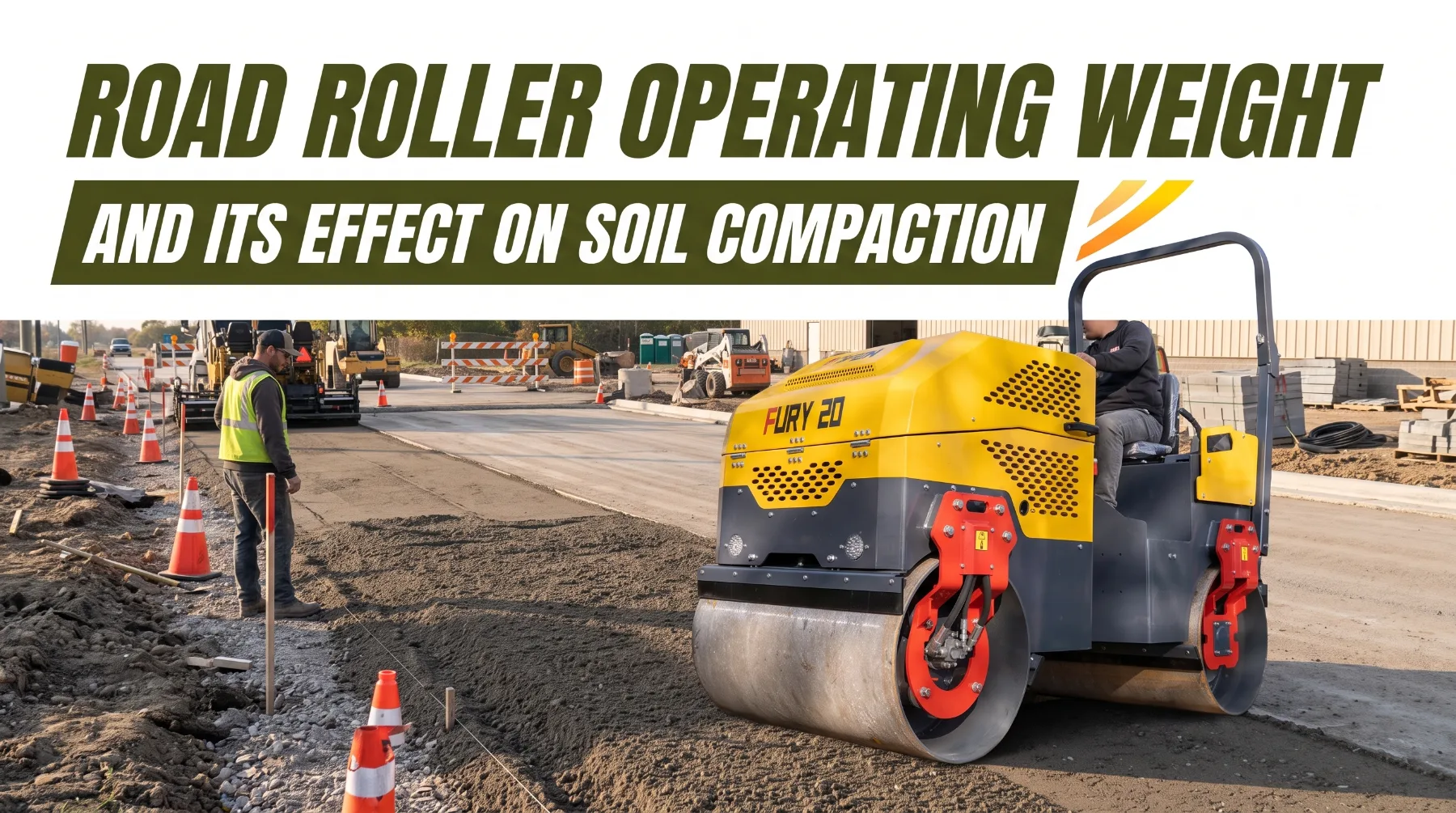
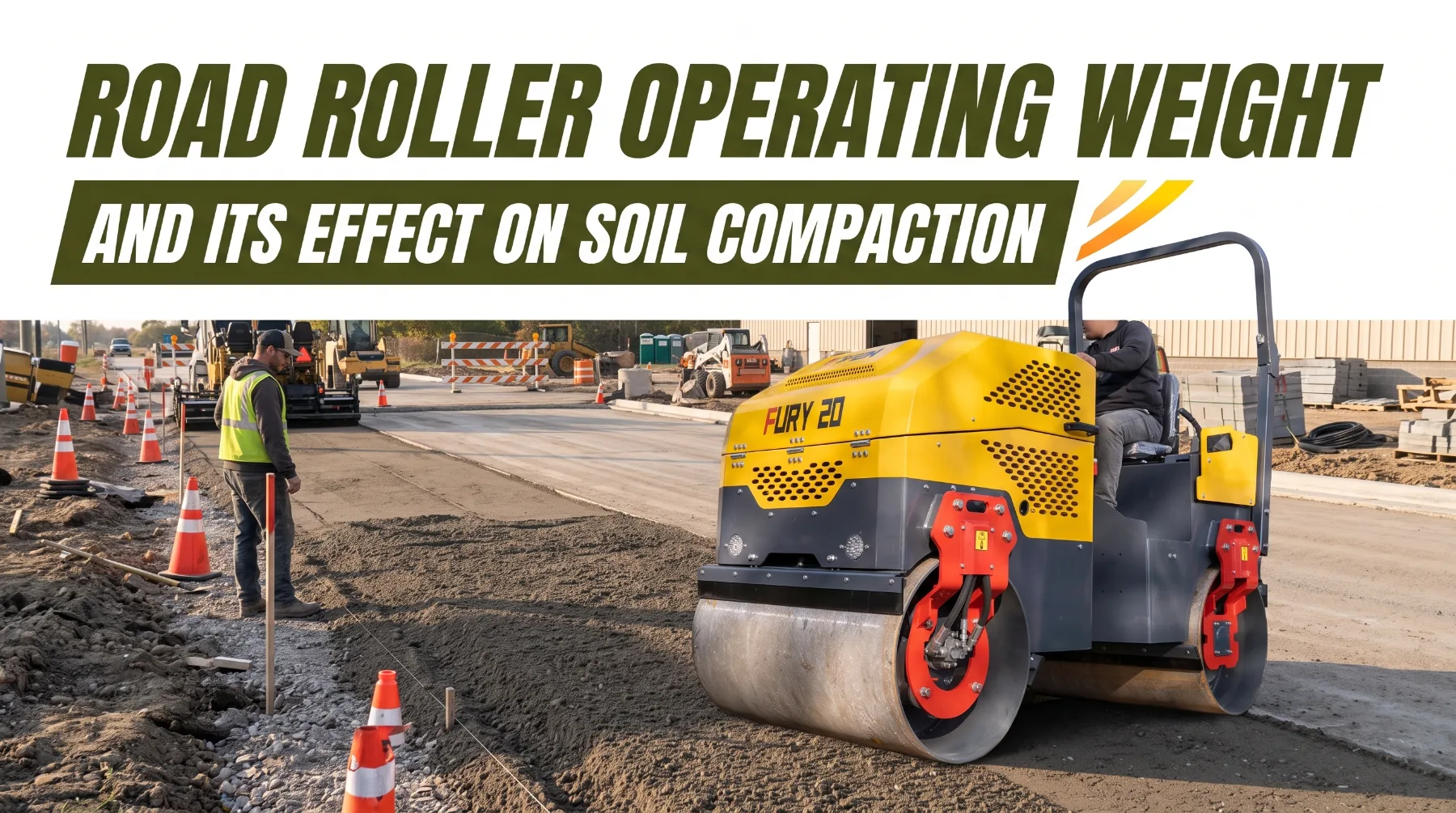
Preparing a parking area for paving often starts with spreading and compacting a fresh layer of base material. Once the roller begins making passes, achieving the required density depends on more than simply covering the surface repeatedly. The force transferred into the material during each pass plays a major role, and operating weight is one of the key factors behind that force. Machine weight affects drum loading and ground pressure, influencing how effectively the roller works through the material.
Compaction results also depend on how the roller‘s weight interacts with the material being compacted. Soil type, lift thickness, moisture content, drum configuration, and travel speed can all change how much additional compaction a pass provides. A heavier machine may apply greater static loading, but the weight still needs to match the material and the conditions rather than being considered on its own.
Matching operating weight to the job helps create a more consistent compaction process. Considering the material type, layer thickness, required density, and overall site conditions gives contractors a better basis for selecting the appropriate roller. Proper machine matching can help avoid excessive passes while supporting the density and surface preparation needed before paving.
Understanding Operating Weight
Operating weight is the machine’s weight in its normal working configuration, including the required fluids and other specified components. It’s not a stripped-down shipping figure; it reflects the roller as it actually works on-site, fueled and ready to run. That distinction matters, because the working weight is what determines the force at the drum.
This mass is central to compaction because it contributes directly to the force applied through the drum as the roller travels across the material. As the machine moves, its weight bears down through the drum and into the layer beneath, pressing the material together. The heavier the working machine, the more static force it can transfer into the ground with each pass, which is why operating weight is a headline specification when comparing rollers.
Key takeaway: Operating weight is the machine’s weight in normal working configuration, including fluids and specified components, and this mass drives the force applied through the drum.
Increasing Static Loading
A heavier roller places greater static force on the surface as its weight is distributed through the drum. Static force is the steady, constant pressure the machine applies simply by resting and rolling across the material, before any vibration enters the picture. More weight means more of this steady pressure pushing down into the layer.
That static loading does real work. Greater force can help compress and rearrange suitable materials, pressing particles closer together and driving out space between them. This matters most when the project calls for substantial loading across a prepared layer, where a heavier machine can deliver the compressive force the material needs. On the right material and the right lift, that added weight translates into more effective compaction per pass.
Key takeaway: A heavier roller applies greater static force through the drum, which helps compress and rearrange suitable materials, especially when the project requires substantial loading.
Matching Weight to Soil Type
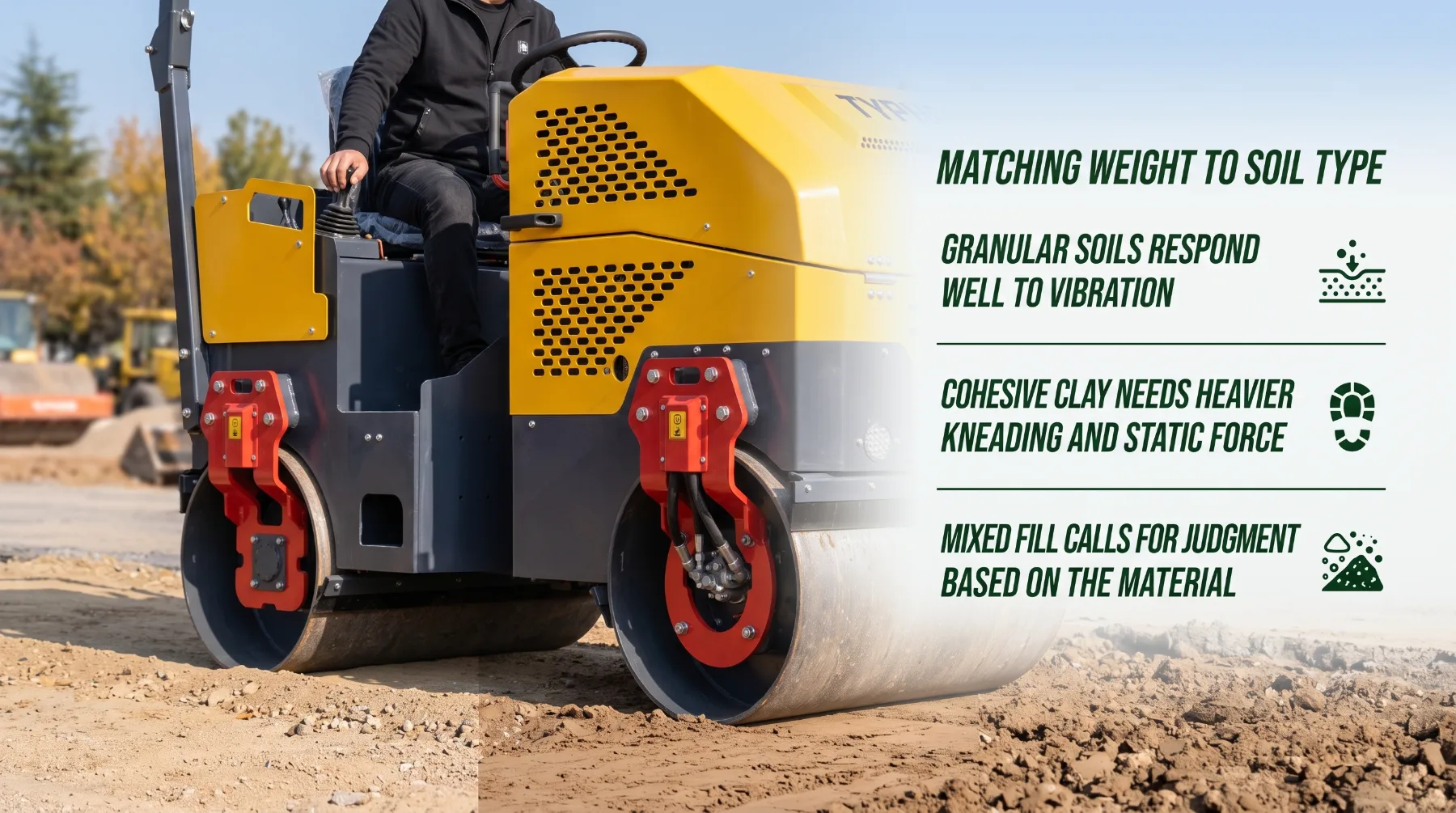
Weight alone doesn’t tell the whole story, because the material decides how effectively that weight compacts it. Soil properties determine how well a given roller weight performs, and different materials respond in different ways to static loading and vibration. The right machine for one soil can be a poor fit for another.
Granular soils, cohesive soils, and mixed fill each behave differently under compaction. Granular materials like sand and gravel often respond well to vibration that shakes particles into a tighter arrangement, while cohesive soils such as clay tend to need heavier kneading and static force to work. Mixed fill sits somewhere between, calling for judgment based on what’s actually in the material. Because of this, machine selection should always account for the material being placed rather than defaulting to weight as a single measure of suitability.
Key takeaway: Granular, cohesive, and mixed-fill soils respond differently to static loading and vibration, so machine selection should account for the specific material being placed.
Considering Lift Thickness
The thickness of each material layer, the lift, influences how deeply the compaction energy needs to reach. A thin lift needs energy to travel only a short way down, while a thicker lift demands force that penetrates deeper to compact the full layer. If the energy doesn’t reach the bottom of the lift, the lower portion stays loose no matter how many passes you make on top.
This is where relying on operating weight alone falls short. A roller has to provide suitable loading and vibration characteristics for the lift being placed, not just carry enough weight on paper. Matching the machine’s capability to the lift thickness, and placing material in lifts the roller can actually compact through, is what ensures density reaches all the way down. Oversized lifts are a common cause of failing density tests even when the surface looks well compacted.
Key takeaway: Lift thickness determines how deeply compaction energy must reach, so the roller must provide suitable loading and vibration for the lift rather than relying on operating weight alone.
Combining Weight With Vibration
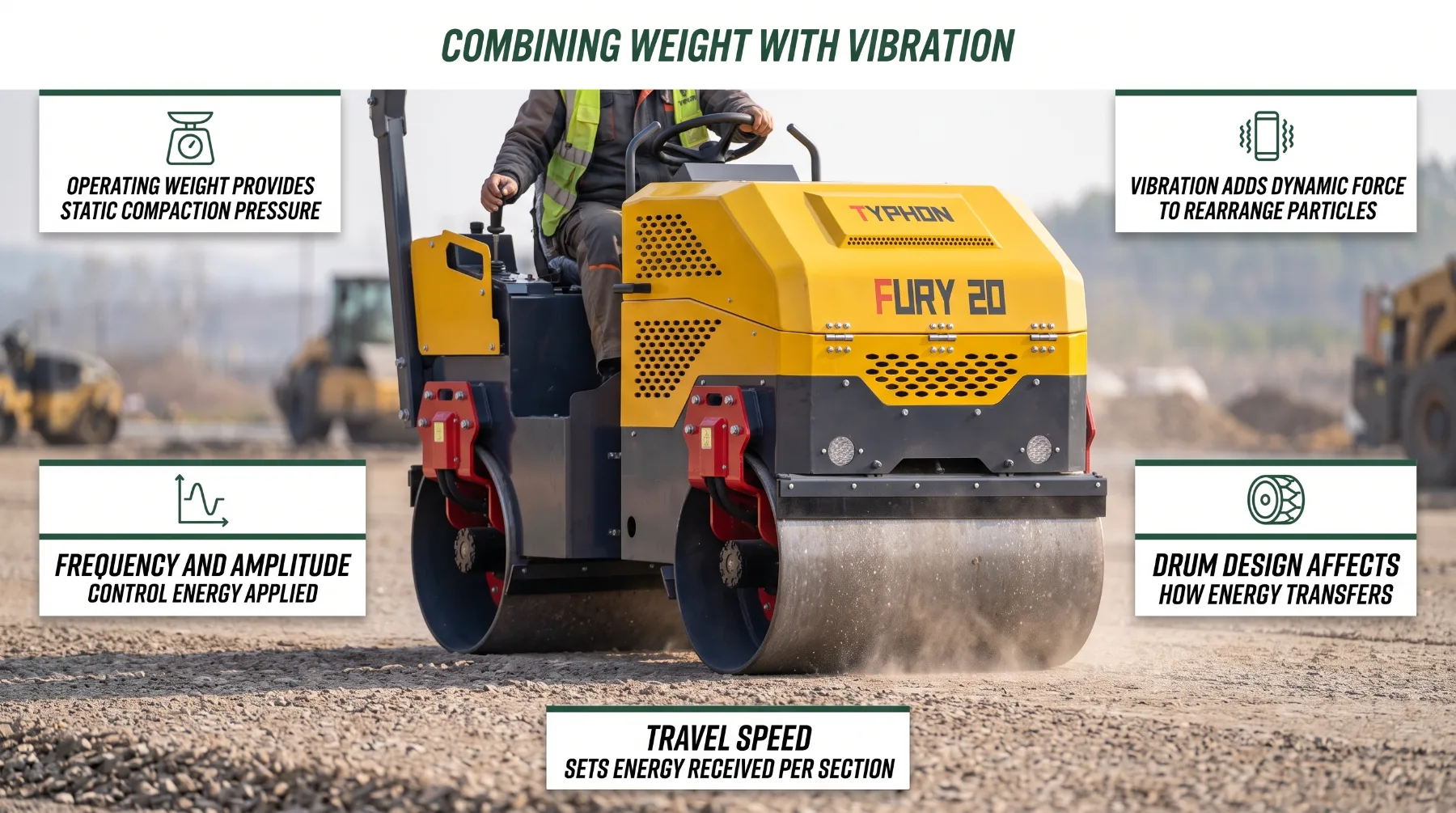
Operating weight provides static pressure, but a vibratory roller adds dynamic force through rapid drum movement. This vibration helps rearrange material particles and reduce air voids, allowing the roller to apply compaction energy beyond what static weight alone can provide.
The final compaction result depends on how weight and vibration work together. Frequency, amplitude, drum design, and travel speed all affect how energy is transferred into the material, so operators need to match these factors to the material type and layer being compacted.
- Operating Weight: Provides static pressure that supports the initial compaction process.
- Vibration: Adds dynamic force to help rearrange particles and reduce air voids.
- Frequency & Amplitude: Control how the drum vibrates and how energy is applied to the material.
- Drum Design: Influences how effectively vibration and weight are transferred into the surface.
- Travel Speed: Determines how much compaction energy each section of the layer receives.
Key takeaway: Vibratory rollers add dynamic force to static weight, and frequency, amplitude, drum design, and travel speed all influence how effectively the layer is compacted.
Monitoring Passes and Density
It’s tempting to assume more weight means fewer passes or automatically better compaction, but that’s not how it works. Static weight, vibration, material condition, and moisture all interact, and no single factor guarantees a result. A heavier machine can help, but it doesn’t replace confirming what the layer has actually achieved.
The reliable approach is to measure rather than assume. Operators should monitor density results, material condition, pass count, and machine settings to judge whether the required compaction has been reached. Density testing confirms whether the target has been met, pass counts help build a repeatable process, and watching the material’s condition and moisture flags when something needs adjusting. Let the results guide the work, and you avoid both under-compaction and the wasted effort of unnecessary passes.
Key takeaway: More weight does not automatically mean fewer passes or better compaction, so monitor density results, pass count, material condition, and machine settings to confirm the target is met.
Conclusion
Road roller operating weight contributes to the static load applied through the drum, but effective compaction depends on how that load interacts with vibration, material properties, moisture, lift thickness, drum configuration, and travel speed. Greater machine weight increases the static loading applied to the material, while soil type determines how granular, cohesive, or mixed materials respond to static and vibratory compaction. Lift thickness is also important because compaction energy must reach the required depth rather than only densifying the surface, while vibration frequency and amplitude influence the dynamic response of the material. Pass count and travel speed further affect the amount of compaction energy delivered to each area, and material moisture can significantly influence achievable density. The roller’s operating weight should therefore be evaluated as part of the complete compaction system rather than as an isolated performance measure. Matching machine weight, drum configuration, vibration settings, lift thickness, material condition, travel speed, and pass pattern to the project requirements, then verifying density against the specification, provides a more reliable basis for achieving the required compaction results.
Frequently Asked Questions
Why does road roller weight matter?
Road roller weight contributes to the static force applied through the drum, pressing particles together and reducing voids in the material. A heavier machine in its working configuration can provide greater static loading per pass. However, weight is only one part of compaction performance. Soil type, lift thickness, moisture, drum design, and vibration all affect how effectively that weight is applied. Match operating weight to the material and project requirements rather than relying on weight alone.
Is a heavier roller always better for soil compaction?
No. The suitable roller depends on soil type, lift thickness, moisture, vibration characteristics, and project requirements. Heavier rollers provide greater static force, but different materials respond differently. Granular soils often benefit from vibration, while cohesive soils may require more static force and kneading. Travel speed and vibration settings also affect results. The machine should be matched to the material and conditions rather than simply selecting the heaviest roller.
Does operating weight affect ground pressure?
Yes. Ground pressure depends on both operating weight and the area over which that weight is distributed. A heavier machine can apply greater force, while drum width and contact area determine how that force reaches the material. Ground pressure affects how the material is compressed and rearranged, but the result also depends on soil type and lift thickness. Considering both weight and force distribution gives a better understanding of how the roller will perform.
Does vibration matter more than roller weight?
Neither works independently. Operating weight provides static force through the drum, while vibration adds dynamic energy that helps rearrange particles and reduce air voids. Granular materials often respond strongly to vibration, while cohesive soils may rely more on static force and kneading. Frequency, amplitude, drum design, speed, moisture, and lift thickness also affect results. Treat weight and vibration as complementary factors and match both to the material and project requirements.